FLOWARE – Research and Development of Flameware Stoneware Product Line
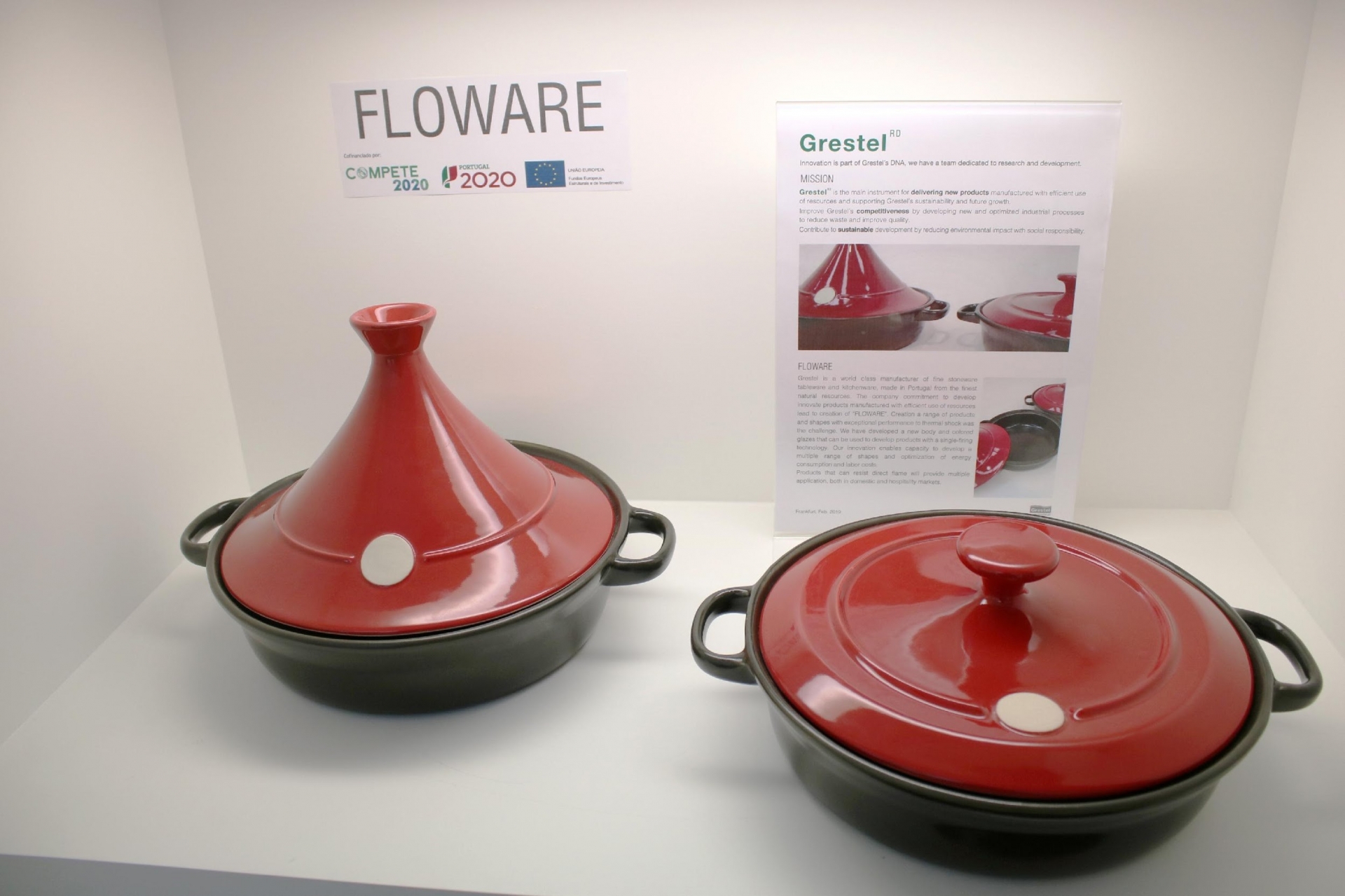
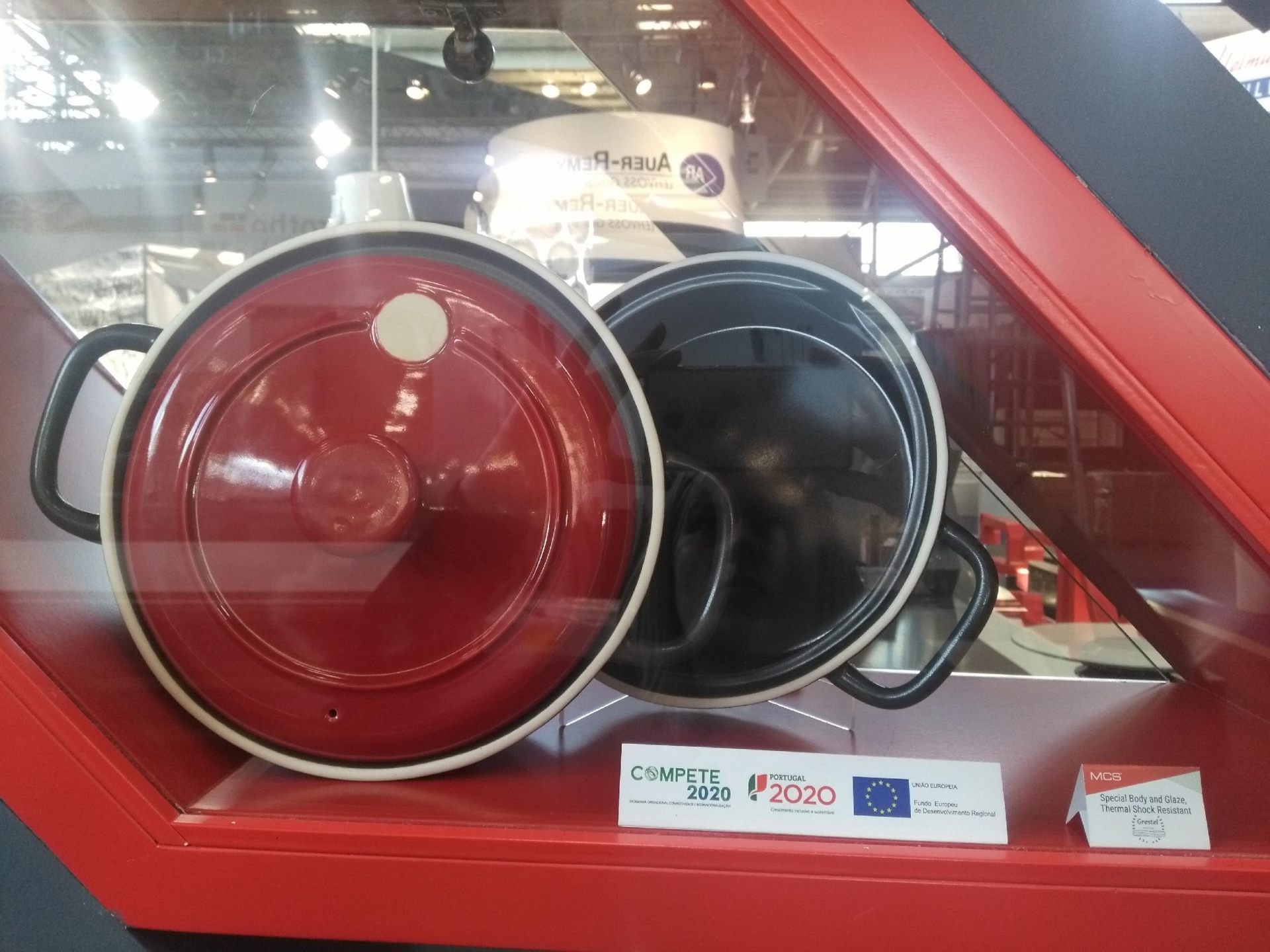
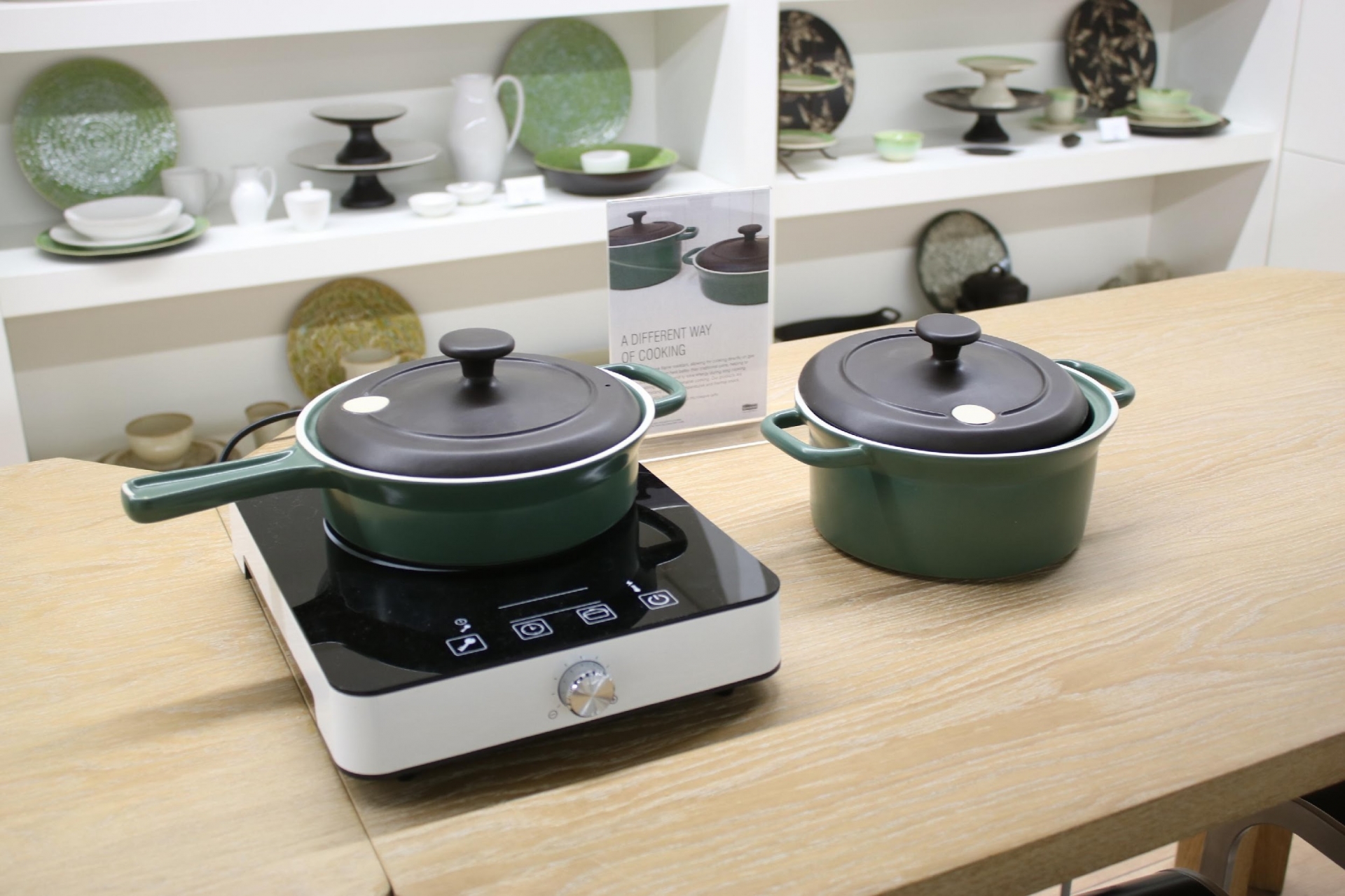
Through the FLOWARE project, the proposing consortium, composed of Grestel and Mota II, aims to develop two clay bodies (plastic and slip) and three glazes (transparent, opaque, and matte) in order to manufacture a product capable of withstanding the thermomechanical stresses resulting from direct exposure to the flames of domestic and industrial stove burners.
The project aimed to obtain:
During the project, the consortium developed two clay bodies (plastic clay and slip) and three glazes (transparent, opaque, and matte) to manufacture products capable of withstanding thermomechanical stresses, particularly when exposed directly to flames from domestic and industrial burners.
Some constraints were identified initially, including difficulties in optimizing the design level of the pottery pieces and unforeseen challenges in sourcing raw materials from the market.
The transition of prototypes from pilot scale to industrial scale presented several challenges that had to be overcome:
Based on information from the University of Aveiro regarding the performance of FLOWARE pieces in the tests they were subjected to, corrections were made at the design level, particularly concerning the rim design, as well as the thickness of the base and walls of the pieces. With the production of larger series, some pieces were put into use in both domestic and industrial environments to assess their real performance and long-term behavior.
In terms of results promotion, an article was published in cfi – Ceramic Forum International [cfi/Ber. DKG 95 (2018) No. 9–10], titled “MOTA Ceramic Solutions (MCS) Low Expansion Ceramic Bodies and Glazes for Ceramic Flameware Manufacture”, and the results were also disseminated at specialized events.
Specific Results:
Through the execution of this project, it was possible to develop a flameware clay body that can be sintered at a firing temperature below 1250°C, with water absorption below 0.5% and a low CTE, allowing the manufacture of flameware pieces comparable to those already available on the market.
Additionally, an innovative firing curve was designed, introducing a plateau during the cooling phase to promote the formation of crystalline phases, thereby reducing the CTE.
The FLOWARE pieces demonstrated resilience when exposed to direct flame. However, weaknesses related to design were detected, including the presence of rims, variations in thickness, sharp angles between the base and walls, and the proportion of flame size to piece size. After adjusting the design, the pieces achieved performance comparable to competing products fired at higher temperatures.
The use of the pieces carries limitations similar to those of existing market products – they cannot withstand extreme thermal shocks, which imposes certain restrictions on their use.